Monongahela River
American RustThe Monongahela River is the geographic and emotional spine of the Mon Valley in the novel: a working waterway shadowed by coal and steel, a route along which Isaac English attempts to leave home, and a familiar presence to which he returns. Its banks place local lives within a landscape of industrial remains and environmental damage, while its recurring appearance marks the tension between escape, death, and continued belonging.
Setting and Industrial Landscape
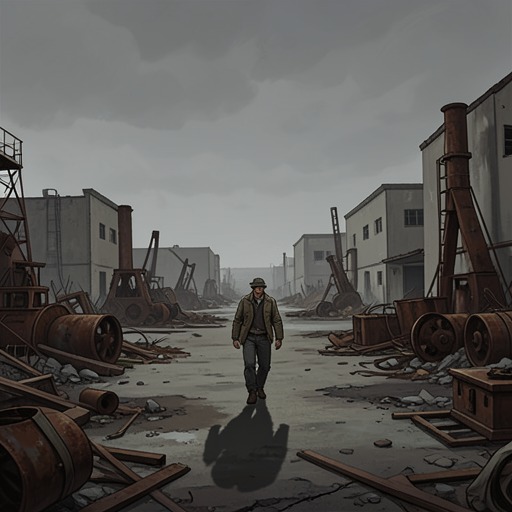
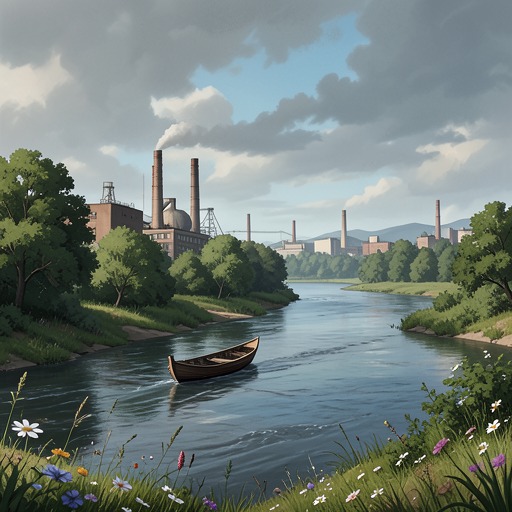
Near Buell, the river winds through green hills and extensive forest, but the view also includes the town and its former steel mill. The mill, closed in 1987 and partly dismantled a decade later, has become a ruin overgrown with vines and young trees. Deer and coyote tracks cross its grounds, where human presence has dwindled to occasional squatters. The river valley thus holds both industrial structures and the evidence of nature reclaiming abandoned land.
The surrounding towns bear the same history in their streets and buildings. Buell retains white houses on the hillside, church steeples, an Orthodox cathedral, and historic stone buildings, but much of downtown is boarded up or neglected. Farther along the river, Brownsville’s once-promising center has empty office buildings and hotels, soot-darkened masonry, and narrow streets that Grace Poe finds appealing despite their abandonment. A newly built highway to Pittsburgh stands largely unused; a neighboring house in Lee’s view has been vacant for twelve years. The river connects these places, but the landscape also makes clear how little the infrastructure and former prosperity have done to reverse the valley’s decline.
The water is not an untouched natural refuge. Isaac watches barges and a towboat carrying coal, then sees a bluegill jump in the shallows. People still eat the fish despite warnings about mercury and PCBs. The scene holds beauty and contamination together: the slow river and forested banks might suggest a landscape far beyond the Valley, yet industrial pollution remains part of ordinary local life.
A Working Waterway
The river remains a route for transporting fuel and a visible measure of the region’s industrial scale. During his travels, Isaac passes the West Penn Power station, its tall stacks sending up steam, and the larger Elrama power plant, lit at night above piles of coal and barges. He recognizes that the apparently clean white plume comes from burning coal. Nearby, a mine complex and rail yard leave coal underfoot, with loaded railcars and empty barges standing still. The river’s movement and the halted equipment coexist: transport continues, but the wider landscape is marked by idleness and decline.
Farther downriver, the Clairton coke works dominate the view. The plant stretches for miles, with smokestacks, buildings, pipes, cranes, and conveyors lit against the dark. Isaac sees workers arriving for jobs and barges unloading coal, a reminder that industrial employment persists even as nearby neighborhoods are run down. The scale of the works does not prevent the surrounding city from suffering abandonment. Through Isaac’s observations, the river corridor is not simply scenery: it links power generation, mining, steelmaking, work, pollution, and the towns bearing their consequences.
Routes of Departure and Return
For Isaac, the river first forms part of a practical escape plan. He intends to reach Pittsburgh by following the railroad tracks beside it, board a coal train, and continue west toward California. The route is legible to him through local knowledge: tracks offer a way around notice, and a train can carry him farther than walking. As Buell falls from view, the familiar railbed and wooded banks turn departure into a physical passage away from his father and the life he has known.
The river also figures in the crisis that binds Isaac to Billy Poe. Isaac walks onto thin ice over the Mon, falls through, and Poe follows him into the water to save him. Poe later understands that rescue as the best thing he has done, a deed that gives meaning to his decision to remain in Buell rather than leave for Colgate. The episode makes the river a boundary between life and death, but also a place where loyalty becomes action and where Poe’s account of himself is shaped by having saved his friend.
Return and Continuity
After his journey, Isaac approaches home by familiar ground. From a hill he considers the distance to the river and decides to walk rather than hitch a ride, estimating that the trip back will take a day and a half. Later, on the bridge over the Monongahela River, he pauses before descending to the tracks. Teenagers beneath the highway notice the hunting knife at his belt; once beyond their sight, he throws it into the river. The gesture marks a change in his relationship to violence and to the identity he has carried while away.
In the final return toward Buell, the river is present even when Isaac cannot see it. At the bank, he stands among reeds, watches sunlight on the slow water, and puts a hand into it as ripples spread outward. The scene follows his decision to trust Bud Harris and others, though Isaac still imagines himself leaving again. The river therefore offers no simple resolution between staying and going. It is at once a route out, the site of a near-fatal rescue, the destination of a discarded weapon, and a continuous feature of the home to which Isaac returns.